The quick version. Multisig locks funds to several keys rather than one, and a set number must sign before anything moves. A 2-of-3 needs any two of three keys, so losing one does not lose the money and stealing one does not steal it. It solves single points of failure, coercion and inheritance better than any single-key setup, but it adds complexity, a backup that is more than seed phrases, higher fees and fresh ways to lock yourself out.
What multisig actually is
An ordinary wallet has one key: whoever holds it can spend, and whoever loses it has lost everything. Multisig replaces that single condition with a quorum, so the coins sit at an address whose spending rule demands signatures from several keys out of a stated set.
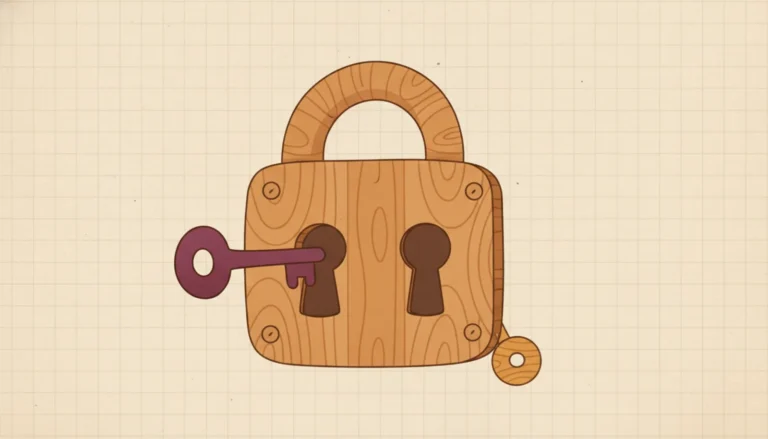
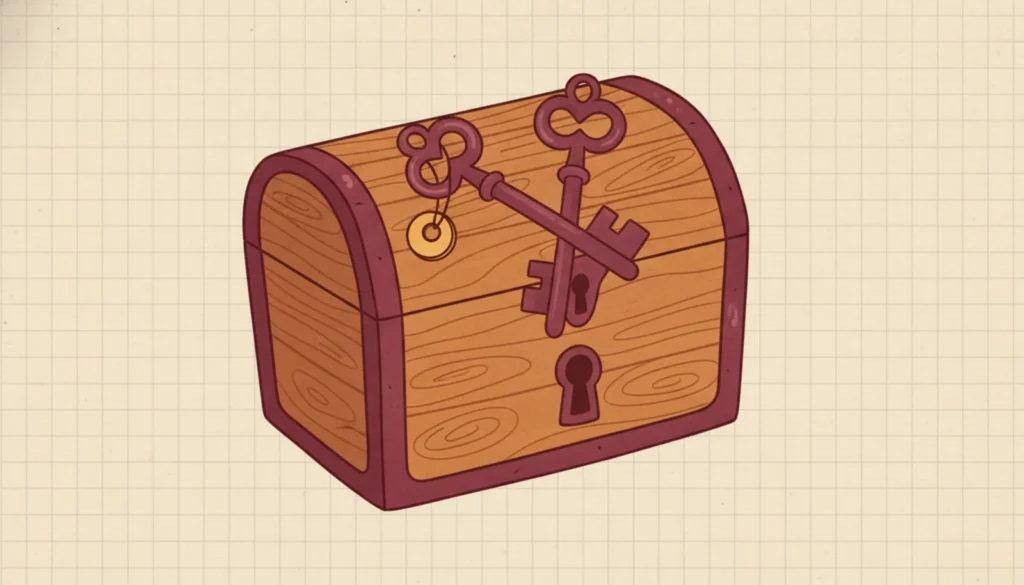
The shorthand reads like a fraction. A 2-of-3 wallet has three keys and any two can authorise a spend; a 3-of-5 has five and needs three. The first number is your tolerance for theft, the second your tolerance for loss.
The keys usually live on separate devices, often from different manufacturers, kept in different places. Signing becomes a relay: a transaction is built, passed to one device, then the next, and only once the quorum is met does it become valid. The network enforces the rule, not a company, so no administrator can waive it.
The problems it solves for one person
Most explanations aim at companies. For an individual the case is different, and it starts with the single point of failure. With one key, one bad event ends the story: a house fire taking the device and the backup beside it, a flood, a theft, a backup destroyed by a well-meaning tidy-up. In a 2-of-3 any one of those is survivable.
The second is theft that starts with discovery. A recovery phrase found in a drawer is a complete key; a single multisig key is not, and it does not reveal where the others are.
The third is coercion. Distributing keys geographically means you genuinely cannot produce the funds on demand in one place, and unlike a passphrase decoy, that is a fact rather than a story someone has to believe.
The fourth is inheritance. A key held by a solicitor or trusted family member, combined with keys you hold, lets your heirs reach the funds without any single party being able to take them while you live. Doing it properly needs documentation and legal input.
The backup is bigger than you think
This catches out almost everyone trying multisig alone. With a single-key wallet the recovery phrase is sufficient: feed it to any compatible wallet and your funds reappear. With multisig the seed phrases are necessary but not sufficient. You also need the spending policy: how many signatures are required, how many keys exist, and the extended public keys with derivation paths.
That bundle is usually captured as an output descriptor or wallet configuration file, and it is the thing people forget. Three perfectly written seed phrases and no descriptor can leave you unable to reconstruct which addresses were yours. Scanning combinations sometimes rebuilds it, but that is a rescue mission, not a plan.
- Back up every seed phrase separately, stored away from the others, each verified rather than assumed.
- Back up the configuration in several places. It holds no spending power, only public information, so copy it more freely than a seed.
- Write the plan in plain language for whoever will follow it: which key is where, which software, what “2-of-3” means.
- Practise a recovery on a test setup, and repeat it occasionally so the knowledge does not decay.
Safety: Build the wallet, back up all keys and the configuration, then move a trivial test amount in and spend it back out using a different combination of keys from the one you set it up with. Without that round trip you do not have a working multisig, you have an expensive theory.
The real costs, stated plainly
Complexity is the largest cost. You now maintain several devices, several backups, a configuration file and coordinating software, all of which must keep working across firmware and app changes.
Fees are higher on chains where transaction size drives cost, because more signatures and script data mean a larger transaction. The difference is rarely dramatic but it is persistent, which argues against multisig for a wallet you spend from often. Our guide to estimating a network fee explains it.
Time is a cost too. Spending means retrieving devices you deliberately stored inconveniently, which is what makes it safe and what makes it tedious. People who put an everyday balance behind multisig tend to drift into keeping all the keys in one place, which defeats the purpose.
How people lock themselves out
The commonest failure is losing more keys than the policy allows. A 2-of-3 tolerates one loss, not two, and people often discover the second key was already gone when they go looking after the first. Checking on a schedule that every key still exists and still signs is part of owning one.
Next is storing keys somewhere less independent than it looks. Two devices in one house, or two backups in one safe, buys the cost of multisig with the resilience of a single key.
Then there is nobody else understanding the setup. A wallet only you can operate becomes an unsolvable puzzle for your family, so if inheritance was part of the reason you built it, plain documentation is the feature.
Who should consider it, and what to do first
Multisig is worth considering when the amount at stake would genuinely hurt to lose, you already run a hardware wallet confidently, and you have restored from a backup at least once.
The ladder runs like this. Set up a hardware wallet properly, following our setup walkthrough. Make a durable backup, ideally with metal seed backups, and test restoring it. Only then, if the holding justifies it, look at a quorum.
It is also fair to conclude multisig is not for you. A well-backed-up single key, stored sensibly, protects a great many people, and exchange versus self-custody matters more for most readers.
Key takeaways
- Multisig locks funds to a quorum, so a 2-of-3 survives the loss of one key and the theft of one.
- Its strongest case is removing the single point of failure, then coercion resistance and inheritance.
- Seed phrases alone are not a complete backup. You also need the configuration describing the quorum and the key set.
- The costs are complexity, larger transactions and slower spending, so it suits savings, not everyday funds.
- It is not a first step. Get one hardware wallet, a verified backup and a practised restore working first.
Frequently asked questions
Is 2-of-3 always the right choice?
It is the common starting point because it balances both failure directions: you can lose one key without losing funds, and an attacker needs two. Higher quorums such as 3-of-5 spread trust further, which suits shared arrangements, but each extra key is another backup to maintain. Complexity you cannot sustain is not security, it is a slower way to lose access.
Does multisig protect me from phishing or bad approvals?
It helps, but it is not a cure. An attacker who compromises one device still cannot move funds alone, which is a genuine benefit. What multisig cannot do is stop you signing the same malicious transaction on two devices, which is what a convincing fake interface will attempt. Reading the details on each device screen remains essential, since a quorum counts signatures, not intentions.
Is multisig available on every blockchain?
No, and it works differently where it exists. Some networks support quorum rules natively in their scripting, while on others the equivalent is a smart contract wallet, which brings contract risk alongside key management. Support in consumer wallet software varies too, so check what your network and tools actually implement before designing an arrangement around the idea.
Sources
Educational content, not financial advice. Never share your seed phrase or private keys with anyone — including anyone claiming to be CoinCrafty.
Last updated Jul 30, 2026

Margaux Nijkerk reports on DeFi for CoinCrafty.