The quick version. A secure element is a category of small, tamper-resistant chip built to hold a secret and refuse to hand it back, even to someone holding the device in a lab. In a hardware wallet it guards your private keys against physical attacks: chip probing, voltage glitching and power analysis. What it cannot do is protect your judgement. If you approve a malicious transaction or type your recovery phrase into a website, the chip signs away happily.
A chip with a job description
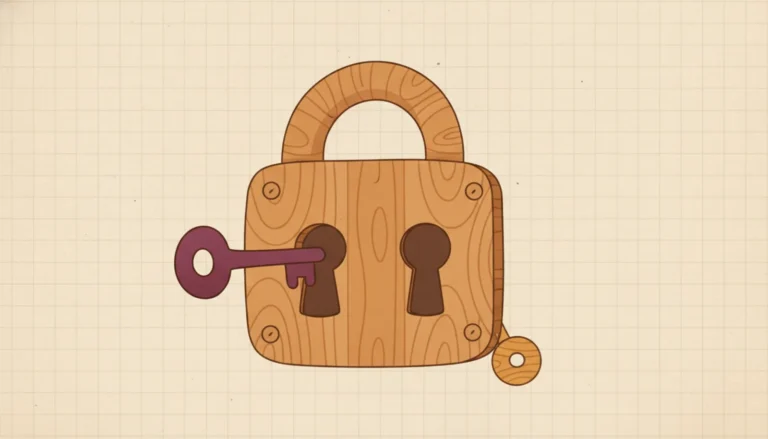
Most chips are designed to be fast, cheap and easy to work with. A secure element is designed to be stubborn. It is a small microcontroller with its own memory, its own cryptographic engine and a hardened physical layout, built to store a secret and compute with it without ever letting the secret out.
The same family of chips lives in bank cards and passports. Your card does not send its key to the payment terminal; the terminal sends a challenge, the chip signs it internally, and only the answer comes back. A hardware wallet works the same way. A transaction goes in, a signature comes out, and the private key never crosses the boundary.
That one-way property is the whole idea. If the key genuinely cannot leave, infecting the laptop the device is plugged into does not by itself get an attacker your coins. It is the mechanism behind everything a hardware wallet offers over a phone app.
The attacks it is built to resist
Secure elements defend against an unusual threat: an attacker who physically holds your device and will spend real money and time on it. That is a much harder problem than blocking remote software, and it drives some odd-looking design choices.
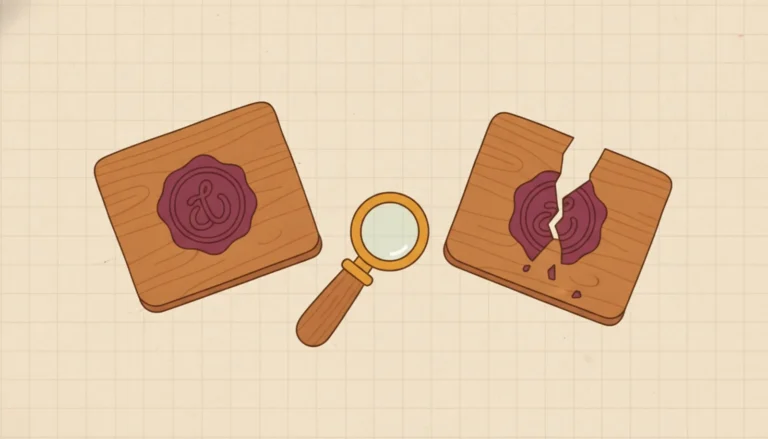
- Physical extraction. Grinding the packaging off a chip to read memory cells under a microscope, or micro-probing the wires inside. Hardened chips answer with active shields, scrambled memory layouts and encrypted internal buses, so a successful read tends to return noise.
- Fault injection, or glitching. Dropping the supply voltage, spiking the clock or firing a laser at the die at exactly the right microsecond, hoping the processor skips the instruction that checks your PIN. Countermeasures include voltage sensors, duplicated checks and randomised timing.
- Side-channel analysis. Not breaking the mathematics but watching the chip do it. Power draw, electromagnetic emissions and timing all leak hints about the key in use. Defences include constant-time code and deliberately injected noise.
There is a quieter benefit that matters more day to day. A secure element can enforce the PIN retry counter in hardware, so wrong guesses cost real time and a run of them wipes the device. Without that, a short numeric PIN would be trivially brute-forced by anyone who found your wallet in a drawer.
What it does not protect you from
This is where buyers most often form the wrong mental model. A secure element protects a key. It does not protect a decision.
If you are persuaded to sign a transaction sending your balance to a stranger, the chip signs it correctly and quickly, because that is its job. The losses people actually suffer rarely involve any chip-level attack: a fake support agent in a chat, a spoofed download page, a token approval granting unlimited spending rights, a “wallet validation” form asking for your words.
It also does nothing once the recovery phrase leaves the device. Photograph it, type it into a notes app or paste it into a browser and the chip’s defences become irrelevant, because the attacker no longer needs to touch the chip. Our walkthrough on how to spot crypto scams covers the patterns that empty wallets in practice.
Safety: No chip design, certification or price changes this rule. A genuine wallet never asks you to type your recovery phrase into a computer, a phone or a web page. Any prompt to do so is an attack, however official the page looks.
The screen matters as much as the chip
A wallet’s security rests on two legs, and people only talk about one. The first is key isolation, which is the chip’s contribution. The second is the trusted display: the small screen that shows what you are about to sign, drawn by the device rather than by your computer.
Without it, malware could show one destination address on your monitor while sending a different transaction to the wallet for signing. The chip would protect the key perfectly and you would still lose the funds. Reading the device screen character by character before pressing confirm is not fussiness; it is the part of the system that catches the attack the chip cannot see. Our setup walkthrough builds that habit in from the first step.
Open source versus certification
There is a genuine, unresolved disagreement here, and it is worth understanding rather than picking a side from a marketing page.
Chip makers that produce hardened secure elements typically keep datasheets and internal firmware behind non-disclosure agreements. Their argument is that publishing countermeasures helps attackers design around them, and that independent laboratories already attack the parts under formal certification schemes with real laser rigs and oscilloscopes.
The counter-argument is simple: you cannot audit what you cannot read. Some designers therefore prefer fully documented, general-purpose microcontrollers, accepting weaker physical hardening in exchange for firmware anyone can inspect. Others use both, keeping the secret in the hardened part while the open part handles logic. Certification is a third-party opinion you cannot personally verify; open source is a verifiability you probably will not personally exercise. Both are proxies for trust.
How much should this weigh when buying
Start from your own threat model. If the realistic risk is malware, phishing and your own mistakes, any reputable device with a proper on-device screen already moves you a long way, and the chip architecture is a secondary detail. If someone physically taking the device is plausible, physical hardening matters far more.
Be sceptical of comparisons that reduce a wallet to a chip name. Supply chain integrity, the companion app, how the phrase is generated and how clearly transactions are displayed all matter at least as much. The practical purchase checks are in buying a hardware wallet safely, and our research-based hardware wallet reviews compare models on those grounds.
Key takeaways
- A secure element is a tamper-resistant chip category that signs internally, so the key never leaves the device.
- It targets physical attacks: probing and decapping, voltage or clock glitching, and side-channel leakage.
- It offers no defence against phishing, malicious approvals, or a recovery phrase you have typed somewhere it should never go.
- The device’s own screen is the other half of the system, because it stops your computer lying about what you are signing.
- Certification and open source are partial answers to the same trust question, and neither is proof of safety alone.
Frequently asked questions
Is a wallet without a secure element unsafe?
Not automatically. A wallet built on an open, general-purpose microcontroller still keeps keys off your internet-connected computer, shows transactions on its own screen and demands physical confirmation, which addresses the risks most people face. The trade-off appears when someone has the device in their hands, because physical hardening is exactly what a secure element adds. Choose based on whether theft is part of your threat model.
Can a secure element be broken?
Treat it as very expensive to attack rather than impossible. Hardened chips raise the cost of extraction to the level of specialised equipment, laboratory time and skilled researchers. Security research does periodically find weaknesses in specific implementations, which is one reason firmware updates get published. Assume strong resistance rather than magic, and keep your recovery backup safe regardless of what the chip promises.
Does it mean I can skip writing down my recovery phrase?
No, and this is a dangerous misreading. The chip protects the key while the device works. It does nothing if the device is lost, stolen, damaged or forgotten during a move. Your recovery phrase is the only route back to those funds, which is why it must exist offline, on paper or metal, before you put meaningful value on the wallet. They solve different problems.
Educational content, not financial advice. Never share your seed phrase or private keys with anyone — including anyone claiming to be CoinCrafty.
Last updated Jul 30, 2026

Sidhartha Shukla covers crypto and business markets for CoinCrafty.