The quick version. Turn the claim into something checkable, find the primary source rather than a summary of it, work out whether a number is measured or projected, and ask who gains if you believe it. Urgency is not a reason to hurry; it is a reason to slow down.
Turn the claim into something checkable
Most claims that cause harm are vague on purpose. “Backed by major institutions”, “fully audited”, “partnered with” — none of these can be true or false as written, which is exactly why they are used.
So restate the claim in a form that could fail. “Audited” becomes: which firm, which report, which version of the code, and what did it actually say? “Partnership” becomes: is there a signed agreement, or did somebody attend the same conference?
If a claim cannot be restated in checkable form, that is your answer. You are not verifying anything; you are being asked to feel something.
Find the primary source, not a summary of it
Almost every crypto claim traces back to a document somebody can publish: a protocol specification, project documentation, a code repository, a governance proposal, a regulator’s filing. The chain from claim to document is what you are following.
Work backwards deliberately. An influencer cites an article, the article cites a blog post, the blog post cites nothing at all. That last step is common and decisive: the claim never had a source.
When you reach a primary document, check it is the current one and that it says what the summary claimed. Read the caveats too, since a good deal of the distortion happens by omission rather than invention.
Is the number measured or projected?
This single distinction resolves most confusion. A measured number describes something that has already happened and can be checked independently. A projected number describes something someone hopes will happen.
Yields are the usual offender. A rate presented as a headline may be an annualised extrapolation of a short, unusual period, or it may depend on token emissions that change. Neither is dishonest by itself, but the two are not the same kind of statement and should not be compared as if they were.
Ask three questions of any figure: what exactly is being counted, over what period, and by whom. Where a number is produced by the party that benefits from it looking good, treat it as a claim rather than a measurement. Our guide to reading tokenomics without getting fooled works through the common presentation tricks.
Ask who benefits if you believe it
Incentives are not proof of dishonesty, and mapping them is not cynicism. It simply tells you how much independent confirmation a claim needs before you rely on it.
Ask who profits if more people buy in: holders of an unlocked allocation, a team with tokens vesting, a paid promoter, an affiliate earning per sign-up. Disclosure standards vary enormously and much promotion is not labelled at all.
Then look for the opposite: someone credible arguing the other side, and what the strongest counter-argument is. A project that can point you to its own risk documentation is behaving differently from one whose community treats questions as attacks.
An audit is a document, not a logo
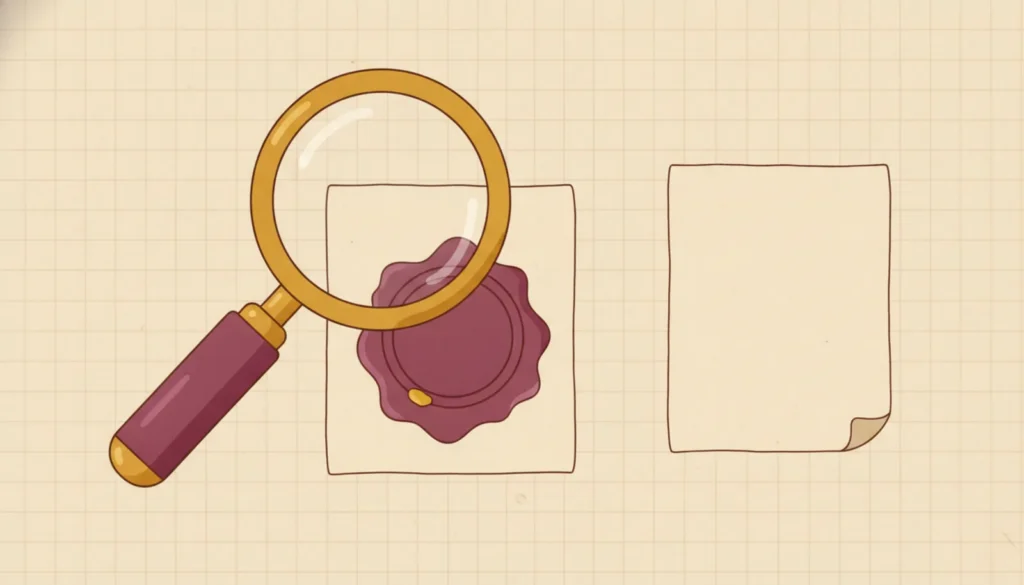
A logo on a website is decoration. The audit is the report: who performed it, which commit or contract version was reviewed, what scope was agreed, which issues were found, and which were actually fixed.
Reports are frequently published, and reading the summary alone tells you a great deal. Common gaps include a review of an earlier version than the code now deployed, findings marked acknowledged rather than resolved, and a scope that excluded exactly the component that matters, such as an upgrade mechanism or an admin key.
Even a clean report is a snapshot of one version at one moment, not a guarantee. Our explainer on what a smart contract audit means sets out what the process can and cannot tell you.
Check the contract address independently
For anything involving a token or a contract, the address is the identity. Names and tickers can be copied freely; the address cannot. Look it up on a block explorer and read what is actually there: when it was deployed, whether the source is verified, how many holders it has, and whether ownership or upgrade permissions still sit with a single account.
Get the address from the project’s own documentation, reached by typing the domain yourself, and compare it character by character against whatever a post or message gave you. Look-alike tokens exist precisely because most people check the first four characters and stop. If you have already interacted with a contract you now doubt, review your token approvals.
Safety: No verification step ever requires your recovery phrase, and no legitimate check involves “validating” your wallet on a website. While you are still checking a claim, do not connect a wallet holding savings and do not approve anything — use a separate wallet with a small balance, or simply read the data on a block explorer without connecting at all.
Treat urgency as evidence in itself
Deadlines, closing allocations, expiring airdrops and “final hours” exist to stop you doing everything above. A claim that cannot survive an hour of checking is telling you something about itself.
The same goes for pressure applied socially: mockery for asking questions, private messages from a stranger who wants to help, or a friend’s account behaving unusually. These patterns are covered in more detail in how to spot crypto scams.
The habit worth building is small: no action on the same day you first hear a claim, unless you have followed it to a primary source. Genuine opportunities survive a night of sleep. For a fuller method, our lesson on how to evaluate a crypto project applies the same discipline to a whole project rather than a single claim.
Key takeaways
- Restate a claim so it could be proved false. Claims that resist restating are marketing, not information.
- Follow the citation chain to a primary document, then check the document says what the summary claimed.
- Separate measured numbers from projected ones, and ask what is counted, over what period, and by whom.
- An audit is a report with a scope and a version, not a logo. Read who reviewed what, and what was fixed.
- Verify contract addresses from the project’s own documentation, and treat urgency as a reason to slow down.
Frequently asked questions
How much checking is proportionate?
Scale it to what you would lose if the claim is false. Reading an opinion costs nothing and needs no verification. Moving funds, granting a contract permission over your tokens, or connecting a wallet deserves the full chain: primary source, contract address, incentives. The asymmetry is the point, because these actions are usually irreversible.
What if I cannot find any primary source at all?
Then you have learned something useful. An absence of documentation for a claim that would be easy to document is itself evidence, particularly for assertions about partnerships, reserves or regulatory status, which normally leave a paper trail. Treat the claim as unsupported rather than as pending, and do not act on it while you wait for proof that may never arrive.
Does a large community mean a claim is credible?
No. Community size measures interest and marketing reach, not accuracy, and enthusiasm makes people repeat claims without checking them. Engagement can also be bought. Judge the substance instead: does the project document its own risks, answer awkward questions directly, and publish things that can be independently verified?
Can I rely on a block explorer alone?
An explorer is excellent for what it shows: deployment, holders, transfers, verified source, permissions. It cannot tell you whether the code is well designed, whether an admin key is held responsibly, or whether the team is who they say they are. Use it as one strong input among several, not as a verdict on its own.
Educational content, not financial advice. Never share your seed phrase or private keys with anyone — including anyone claiming to be CoinCrafty.
Last updated Jul 30, 2026

Margaux Nijkerk reports on DeFi for CoinCrafty.